


Struggling to get visitors to your website? You’re not alone. Many South African small businesses face the same issue due to tight budgets, poor mobile optimisation, and limited visibility on key platforms. Here’s the good news: you can fix it without spending a fortune or needing advanced skills.
Quick fixes to boost traffic:
- On-Page SEO: Update meta titles, compress images, and use local keywords like "bakkie hire Johannesburg."
- Social Media: Share posts on Facebook and Instagram with clear calls-to-action and targeted hashtags.
- Improve Mobile Speed: Compress images, enable caching, and use tools like Google PageSpeed Insights.
- Google Ads: Target high-intent local keywords like "plumber near me Cape Town" with small daily budgets.
- Local Content: Answer specific customer questions, e.g., "What are emergency plumber costs in Cape Town?"
Why it matters: With 75% of South African internet traffic coming from mobile devices and platforms like Facebook and Google dominating online interactions, these steps can help you stand out, attract more visitors, and grow your business.
Start small, track your progress using tools like Google Analytics, and refine your approach as you go. These fixes can deliver results in days, not months.
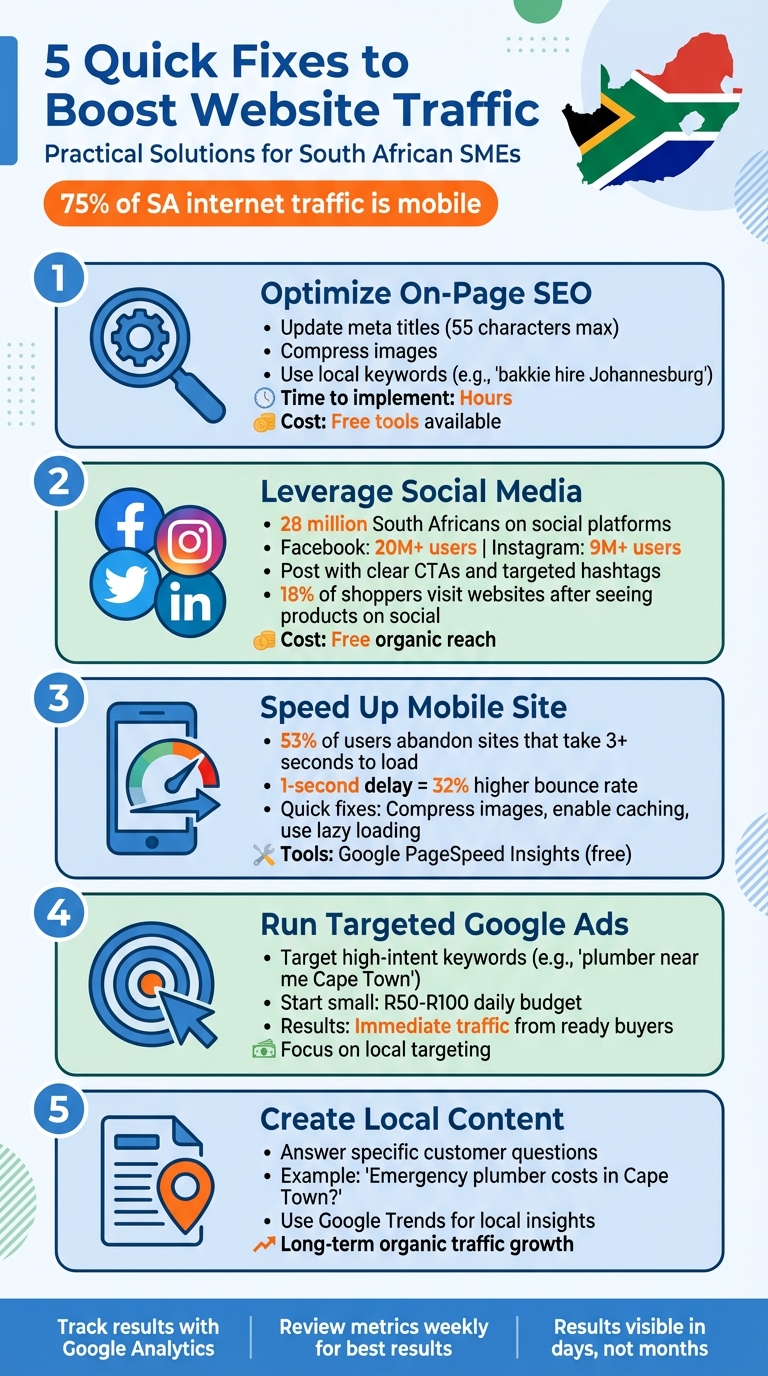
5 Quick Fixes to Boost Website Traffic for South African SMEs
5 Proven Ways to Get FREE Website Traffic (That Actually Work)
Why South African SMEs Struggle with Low Website Traffic
South African SMEs face a unique set of challenges when it comes to driving consistent traffic to their websites. For many of these businesses, website visits only spike during active promotions, leaving them struggling to build a steady stream of visitors over time.
One major factor is the dominance of mobile internet usage. In South Africa, a staggering 75% of internet traffic comes from mobile devices. Despite this, many SME websites are poorly optimised for mobile users. Slow load times are a particular issue – if a site takes longer than 3 seconds to load on mobile, users are likely to leave. This is critical because 70% of consumers say that page speed directly influences their purchasing decisions.
Budget constraints also play a significant role. Many SMEs in South Africa operate with tight financial resources, making it difficult to afford visibility on major digital platforms. Organic reach on platforms like Google and Facebook is minimal without paid support, and investing in SEO services – which can cost anywhere from R3,500 to R20,000 per month – is beyond the reach of many small businesses.
On top of these challenges, the behaviour of local internet users adds another layer of complexity. South African consumers tend to research extensively online, especially via mobile, before making purchasing decisions. Without tools like email marketing or WhatsApp alerts to maintain direct communication, SMEs risk losing these potential customers during the research phase.
Lastly, the online landscape in South Africa is dominated by a handful of platforms. Google, Facebook, and YouTube are the starting points for most online interactions. SMEs are forced to compete in these crowded spaces, where Google Organic Search drives only 45–50% of external clicks, with Paid Search contributing just 7–8%. Without a focused strategy to stand out on these platforms, even the most well-designed websites can struggle to gain traction.
1. Optimise On-Page SEO for Quick Wins
If you’re looking to boost your website’s traffic without breaking the bank, on-page SEO is the perfect starting point. It gives you control over key website elements and doesn’t require expensive developers. The focus? Three main areas: meta titles and descriptions, page load speed, and content relevance.
Speed of Implementation
The beauty of on-page SEO is how quickly you can see results. Simple fixes, like updating meta titles (stick to 55 characters and include your target keyword) and crafting compelling descriptions, can often be done in just a few hours.
Cost-Effectiveness
For small and medium-sized businesses (SMEs), on-page SEO is a cost-effective way to maximise returns. Many free tools are available to help you handle these updates yourself. Start with impactful fixes like adding missing title tags, optimising slow-loading images, and fixing broken links.
Impact on Traffic Volume
When done right, optimised meta titles and descriptions, along with faster page load speeds, can significantly improve your search rankings and user engagement – especially on mobile. Compressing images and simplifying site navigation are key steps to achieving this.
Relevance to South African SMEs
For South African SMEs, tailoring your on-page SEO to local search habits can make all the difference. Use region-specific keywords like "bakkie hire Johannesburg" or "affordable WiFi packages Cape Town" to attract the right audience. Keep your URLs simple and make use of internal links to guide visitors through your site. Not only does this improve navigation, but it also keeps users engaged for longer and signals to search engines that your content is well-structured and useful. These quick adjustments can lay a solid foundation for improving your website’s overall performance.
2. Use Social Media to Drive Immediate Visits
Social media is a powerful tool for driving traffic to your website quickly. With over 28 million South Africans actively engaging on platforms like Facebook, Instagram, and TikTok, it offers a direct way to reach people where they already spend their time and guide them to your site.
Speed of Implementation
Getting started is straightforward. Create business profiles on platforms like Facebook, Instagram, and LinkedIn, and include a link to your website in your first post. Add a clear call-to-action, such as "Shop now" or "Visit our website for more details," to encourage clicks. Tailor your content for each platform: LinkedIn works well for articles, while Instagram thrives on images and videos. To increase visibility, use targeted hashtags that align with your content.
Cost-Effectiveness
Organic social media marketing doesn’t cost a cent and can still bring in leads. For those willing to invest, paid advertising on platforms like Facebook and Instagram allows you to target specific audiences without breaking the bank. With 73% of shoppers discovering products on social media, these ads are a smart way to connect with potential customers. In fact, nine out of ten marketers report that social media marketing boosts website traffic.
Impact on Traffic Volume
Social media’s influence on website visits is undeniable. Around 18% of shoppers head to a retailer’s website after spotting a product on social platforms. To maximise this, post regularly, engage with your audience, and share content that’s either helpful or entertaining. This approach not only drives traffic but also encourages repeat visits.
Relevance to South African SMEs
For small and medium businesses in South Africa, focusing on the platforms your customers prefer is key. Facebook leads the pack with over 20 million active users, while Instagram boasts more than 9 million. Use these platforms to share local promotions, respond to customer feedback promptly, and build trust by showcasing the personal side of your business. Additionally, WhatsApp Business is an excellent tool for personalised conversations that can lead directly to website visits. These efforts not only bring immediate results but also lay the groundwork for sustainable growth in website traffic.
3. Speed Up Your Site for Mobile Users
A slow-loading website can drive visitors away in droves. Google reports that 53% of mobile users will abandon a page if it takes more than three seconds to load. For businesses, especially those relying on mobile traffic, this could mean losing potential customers before they even see your content.
How Speed Affects Traffic
HubSpot highlights a startling reality: just a 1-second delay in load time can increase bounce rates by 32% and cut conversions by 7%. When users leave your site quickly, Google interprets this as a poor experience, which can push your search rankings lower. On the flip side, improving your site’s speed reduces bounce rates and keeps visitors engaged longer. This sends a positive signal to Google, boosting your ranking and, ultimately, your traffic. It’s a clear win for any business.
Quick Fixes You Can Implement
Start by diagnosing your site’s performance with free tools like Google PageSpeed Insights, GTmetrix, or Pingdom. These tools identify specific issues slowing you down. Simple, effective fixes include:
- Compressing large images with free online tools.
- Enabling browser caching to speed up page loads for returning visitors.
- Using a caching plugin and activating lazy loading for images if you’re running a WordPress site. Lazy loading ensures images only appear as users scroll, reducing initial load times.
Many of these changes are easy to implement and can show results within days.
Affordable Solutions
Improving your site’s speed doesn’t have to break the bank. Free tools can handle tasks like image compression, while services such as Cloudflare offer free CDN (Content Delivery Network) plans. CDNs store copies of your site on multiple servers worldwide, ensuring faster load times for users, no matter their location.
Investing in high-quality hosting is also worth considering. High-performance servers can load pages up to 50% faster. Plus, businesses that regularly maintain their websites see 45% more traffic compared to those that don’t.
Why This Matters for South African SMEs
For South African SMEs, having a fast mobile website is not just a nice-to-have – it’s a necessity. Many local businesses lose out on potential customers due to sluggish mobile load times. To stay competitive, focus on the essentials:
- Compress images to reduce file sizes.
- Minimise unnecessary plugins.
- Ensure your site is mobile-friendly with a responsive design that works seamlessly across devices.
These straightforward, budget-friendly steps can make a big impact, helping your business attract and retain more mobile users without needing a hefty investment.
sbb-itb-6f8605a
4. Run Targeted Google Ads to Reach Ready Buyers
Google Ads can bring immediate traffic by putting your business in front of people actively searching for what you offer. Unlike organic strategies, which can take weeks or even months to show results, a carefully planned ad campaign can start driving visitors to your site within hours.
Quick Setup for Fast Results
Getting started with Google Ads is straightforward. Set up an account, write compelling ad copy, choose relevant keywords, set your budget, and launch your campaign. For South African small and medium-sized enterprises (SMEs) looking to see results quickly, this quick turnaround is a game changer, offering immediate visibility without waiting for organic growth.
Driving Ready-to-Buy Traffic
Google Ads is particularly effective when targeting high-intent keywords – search phrases that signal a customer is ready to buy. For example, bidding on terms like "buy running shoes Johannesburg" or "plumber near me Cape Town" connects your business with people actively looking for your product or service. This focused approach means the visitors you attract are more likely to convert into paying customers.
Managing Costs Effectively
While advertising costs can be a concern, Google Ads is designed to deliver quality leads rather than just high traffic numbers. You can start small, with a daily budget of just R50 to R100, and use targeted keyword research to manage your cost-per-click effectively. Tools like Google Analytics can help you track which ads and keywords perform best, allowing you to invest more in successful campaigns and cut back on underperforming ones. Additionally, aligning your landing pages with your ad’s intent can improve your Quality Score, which helps lower costs over time. This approach not only drives immediate traffic but also provides measurable insights for future campaigns.
Local Targeting for South African Businesses
For SMEs with a local focus, location-specific targeting is crucial. Features like location extensions and local keyword bidding ensure your ads reach the right audience in your area. For instance, a Durban seafood restaurant could target "best seafood restaurant Durban", while a Pretoria-based accounting firm might focus on "small business accountant Pretoria." This level of precision ensures that every rand spent is reaching potential customers nearby. Regularly monitoring your campaigns with analytics tools can help fine-tune your strategy for even better results.
5. Create Content That Answers Local Customer Questions
After exploring technical and paid strategies, let’s talk about something that can really set your business apart: answering local customer questions. By addressing the specific concerns of your audience, you not only build trust but also position your site as a go-to resource. Search engines notice this and often reward you with better rankings and more visibility.
Relevance to South African SMEs
Understanding your local audience is key. For example, a Cape Town plumbing business could create content around questions like, "How do I fix a burst geyser in winter?" or "What are emergency plumber costs in Cape Town?". Meanwhile, a bakery in Johannesburg might focus on topics such as, "Where can I find the best birthday cake delivery in Sandton?" or "Are there gluten-free options near me?". These location-specific queries help you connect directly with local customers who are actively searching for your services or products.
Tools like Google Trends can give you insights into what South Africans are searching for in your area, allowing you to craft content that meets actual demand.
Cost-Effectiveness
Creating content doesn’t have to drain your budget. It’s more about time and effort than money, making it a smart choice for businesses with limited funds. Instead of investing in pricey tools, start by listening to your customers. What do they ask about in person, on social media, or via email? You can also join local forums and Facebook groups to uncover common questions – these are free goldmines of information.
What’s great about this strategy is its long-term impact. Once published, your content keeps working for you, drawing in visitors without ongoing costs. It’s an excellent complement to other methods, helping you build organic trust over time.
Impact on Traffic Volume
This approach isn’t just cost-effective – it also draws in high-quality traffic. When your content addresses local needs, it naturally improves your search rankings. Over time, consistently answering customer questions builds credibility with both search engines and your audience.
To make this even more effective, develop detailed buyer personas. Knowing exactly who you’re speaking to allows you to tailor your content, making it more engaging and relevant. This strategy attracts visitors who are genuinely interested in your offerings, which means better engagement and, ultimately, higher conversion rates. It’s a win-win for both visibility and business growth.
How to Track Your Results
Once you’ve implemented the quick fixes, it’s time to assess their impact using reliable analytics tools.
Start with Google Analytics to monitor key metrics like sessions, users, and bounce rates. By setting specific date ranges, you can compare traffic data before and after making changes. For example, you could compare 01/12/2025–14/12/2025 to the previous two weeks using the "Compare to: Previous period" feature in the date picker.
Pay extra attention to your bounce rate. If your site speed has improved, you should notice a drop in bounce rates within a few days. A lower bounce rate indicates that visitors find your content engaging, which can positively influence your rankings over time.
For paid campaigns, such as Google Ads, track your click-through rate (CTR) alongside sessions. This helps you determine if your ad spend is attracting the right visitors. New Perspective Studio suggests:
monitor all traffic to your website via tools such as Google Analytics
.
If you’re running social media campaigns, head to the "Acquisition" section under "Traffic acquisition" in GA4. This will show you which platforms drive the most engaged traffic to your site.
Make it a habit to review your metrics weekly. This regular analysis will help you spot trends, refine your approach, and make smarter decisions moving forward.
Conclusion
Low website traffic doesn’t have to be a lasting problem. The strategies discussed here – refining on-page SEO, tapping into social media, enhancing site speed, running targeted Google Ads, and crafting content tailored to local audiences – can produce noticeable results when applied effectively.
Start with the simpler, quick wins like updating meta descriptions and improving your mobile site’s speed. These adjustments can show positive changes in just a few days. Once you’ve nailed the basics, consider investing in paid campaigns. While online advertising can drive traffic quickly, it’s important to account for the associated costs. Whatever strategies you choose, tracking key metrics like bounce rate, click-through rate (CTR), and overall traffic is essential. Without monitoring, it’s impossible to know which efforts are paying off.
Make it a habit to review your analytics every week. Small, consistent tweaks across these areas can build momentum over time, helping you attract more visitors and strengthen your online presence in South Africa. By committing to these strategies, you’ll set the stage for steady, measurable growth.
FAQs
What are the best ways to improve my website’s mobile speed?
To improve your website’s mobile speed, begin by using tools like Google PageSpeed Insights to pinpoint performance issues. Key actions include compressing images into lightweight formats like WebP, minifying CSS and JavaScript, and eliminating unused code to make your site leaner and faster. You can also enable browser caching, which helps returning visitors experience quicker load times. These adjustments not only boost your site’s speed but also create a smoother and more engaging experience for users.
What are the most effective local keywords for South African businesses?
For businesses in South Africa, incorporating localised keywords into your content can drive more relevant traffic to your website. For instance, phrases like ‘web design South Africa’, ‘SEO services South Africa‘, ‘digital marketing South Africa’, and ‘local SEO South Africa‘ are excellent starting points. Depending on your industry, you can also use niche-specific terms like ‘retail SEO South Africa‘ or ‘law firm SEO South Africa’ to zero in on your target audience.
The key is to prioritise keywords that align with both your services and your location. This strategy not only helps you connect with the right audience but also boosts your visibility in local search results, making it easier for potential customers to find you.
How can I use social media to quickly boost my website traffic?
Social media offers a fantastic way to bring more visitors to your website. By crafting content that’s both engaging and easy to share, you can inspire your audience to interact with your posts and pass them along, broadening your reach naturally. It’s smart to focus on platforms where your audience spends the most time, but don’t shy away from trying out less crowded spaces like Pinterest or Reddit – they might surprise you.
Timing plays a huge role too. Posting when your audience is most active can significantly boost your content’s visibility. Regularly promote your top-performing posts and encourage user-generated content (UGC) by inviting followers to share their stories or experiences with your brand. These approaches not only help you connect with your audience on a deeper level but also drive organic traffic to your site in a meaningful way.


