


Want to improve your website’s search rankings? Here’s the deal: SEO in 2025 is all about mobile-first design, AI-powered tools, and local optimisation. With Google’s algorithms now prioritising AI signals, voice search, and user experience, businesses in South Africa need to adapt to stay visible online. This 12-step guide breaks down actionable strategies to boost your rankings and attract the right audience.
Key Takeaways:
- Mobile-first design and fast load times are critical for ranking well, especially with most South Africans browsing on mobile.
- AI-driven tools simplify keyword research, content audits, and performance tracking, saving you time.
- Local SEO and voice search optimisation help smaller businesses compete in location-based searches.
- Regularly update content, fix technical issues, and build strong local backlinks to maintain visibility.
By focusing on these strategies, you can drive more traffic, improve user engagement, and grow your business online.
The Ultimate SEO Checklist (for 2025)
Step 1: Focus on Mobile-First Design and Core Web Vitals
Google prioritises mobile-first indexing, and Core Web Vitals – focusing on page load speed, interactivity, and layout stability – play a key role in determining your search rankings. This is especially important in South Africa, where most people rely on mobile internet for browsing.
Make Your Website Mobile-Friendly
Your website needs to load quickly and look great on all types of mobile devices. Test it on a variety of phones and tablets to ensure buttons are easy to tap, text is readable without zooming, and menus work without glitches. A responsive design is critical – this allows your site to automatically adjust its layout, images, and interactive features to fit any screen size.
Given that many South Africans primarily use their mobile phones for browsing, a clunky mobile experience can cause visitors to leave almost instantly. To avoid this, optimise your site’s loading speed by compressing images, limiting the use of heavy graphics, and using a reliable hosting service. Remember, even a one-second delay in loading time can hurt both your bounce rate and your rankings.
Once your site is mobile-friendly, it’s time to focus on the performance metrics that ensure visitors stay engaged.
Fix Core Web Vitals Issues
Core Web Vitals include three key metrics: Largest Contentful Paint (LCP), First Input Delay (FID), and Cumulative Layout Shift (CLS). These measure how quickly your site loads, how interactive it is, and how stable its layout feels.
- LCP (Largest Contentful Paint): This tracks how long it takes for the largest visible element (like an image or block of text) to load. Aim for under 2.5 seconds. To improve this, optimise large images, reduce third-party scripts, and consider using a Content Delivery Network (CDN) to speed up delivery for South African users.
- FID (First Input Delay): This measures how quickly your site responds when a user interacts with it, like clicking a button or link. Keep this under 100 milliseconds by minimising unnecessary JavaScript and streamlining your site’s code.
- CLS (Cumulative Layout Shift): This ensures your page layout remains stable as it loads, preventing annoying shifts in content. A good CLS score is less than 0.1. To achieve this, reserve space for images and ads and use consistent font sizes.
To identify and fix these issues, use Google PageSpeed Insights. This free tool provides detailed suggestions, such as which images to compress, which scripts to delay, and which layout elements to adjust.
Once you’ve tackled these fixes, monitor your progress using the Core Web Vitals report in Google Search Console. This tool highlights pages that still need work and tracks your improvements over time. Prioritise your most important pages first before addressing the rest of your site.
Improving Core Web Vitals often requires technical updates to your website’s code or hosting setup. If these changes feel overwhelming, consider hiring a skilled web developer to ensure everything is done correctly.
Step 2: Use AI-Powered SEO Tools
AI is transforming how SEO strategies are executed in South Africa, making it easier to analyse data and uncover opportunities that would otherwise take hours to pinpoint manually. For South African businesses, these tools can detect local search patterns, identify gaps in competitor strategies, and highlight content opportunities that traditional methods often overlook.
The trick lies in combining the precision of AI with your understanding of the South African market. While AI can process massive amounts of data in seconds, it’s up to you to interpret the results through the lens of local consumer behaviour and preferences. Let’s dive into how AI can refine keyword research and content audits to better meet South African market needs.
Apply AI for Keyword Research
AI-driven keyword research goes far beyond just pulling search volume stats. These tools can map out relationships between keywords, predict trending topics, and even uncover long-tail phrases that your competitors might have missed.
For South African businesses, AI tools can generate localised keyword variations. For instance, if you’re targeting "affordable car insurance" in Johannesburg, AI might suggest alternatives like "budget car cover Joburg" or "cheap vehicle insurance Gauteng". These tools are adept at recognising regional language patterns and can surface terms you might not have considered.
Take SEMrush‘s AI Writing Assistant as an example. It analyses your target keywords and suggests related terms based on what’s currently performing well. It can even highlight gaps in your keyword strategy by comparing your content with top-ranking competitors in the South African market.
AI tools are also excellent for finding question-based keywords, particularly with the rise of voice search. South Africans increasingly use mobile voice search to ask questions like, "Where can I find the best boerewors in Cape Town?" AI can identify these conversational keywords, helping you craft content that directly addresses such queries.
Google’s Keyword Planner has also incorporated machine learning to suggest broader keyword themes rather than just individual terms. This enables you to understand the bigger topics your audience is interested in, allowing you to create content that covers multiple related searches.
When using AI for keyword research, focus on search intent rather than just search volume. AI can categorise keywords based on whether users are looking for information, planning to make a purchase, or seeking a specific service. This allows you to prioritise keywords that align with your business objectives and create content that meets user needs.
Once your keywords are refined, it’s time to evaluate your content’s performance using AI audits.
Run AI-Powered Content Audits
For businesses in South Africa, staying updated with local trends is essential. AI-powered audits can quickly spot outdated content, gaps in your strategy, and areas for improvement.
Surfer SEO is a great tool for analysing your content against top-ranking competitors. It provides actionable recommendations, such as missing keywords, ideal content length, and structural tweaks to improve your rankings. The tool evaluates factors like keyword density, semantic relevance, and how well your content addresses user intent.
MarketMuse takes this further by identifying key topics your website should cover to establish authority. For example, a South African business might discover competitors are ranking for topics like local regulations, regional preferences, or seasonal trends that your site hasn’t addressed yet.
AI audits are also useful for detecting content decay – when pages that once ranked well start losing visibility. This often happens with outdated information, such as pricing pages still showing 2023 rates or service descriptions that no longer reflect what’s currently offered.
Tools like Frase use natural language processing to evaluate whether your content is detailed enough to meet user expectations. For instance, if you’re writing about "starting a business in South Africa", AI might suggest including information on CIPC registration, tax requirements, and BEE compliance – essential details that comprehensive articles on this topic typically include.
AI can also identify keyword cannibalisation, where multiple pages on your site compete for the same keywords, diluting your rankings. This often happens when similar content is created over time without a clear strategy. AI tools can pinpoint these overlaps and recommend consolidation to strengthen your SEO efforts.
While AI provides detailed insights, the best results come from blending these findings with human expertise. AI can highlight technical issues and content gaps, but it’s your knowledge of your brand, audience, and local market that will turn these insights into content that truly connects with South African consumers. Use AI as a tool to guide your strategy, but let your understanding of your audience lead the way.
Step 3: Research Local Keywords Thoroughly
If you’re aiming for SEO success in South Africa, local keyword research is your cornerstone. It’s not just about driving traffic; it’s about attracting the right visitors by understanding local demographics, cultural nuances, and consumer habits. Since search habits and language can differ across regions, tailoring your keyword strategy to resonate with local audiences is essential. Here’s how you can maximise the impact of local keywords.
Find Location-Based Keywords
Location-based keywords are your gateway to reaching local customers. These keywords include city or regional names, such as "digital marketing Johannesburg" or "SEO services Cape Town." Tools like Google Keyword Planner or SEMrush can help you identify these specific terms and uncover trends in local searches. In South Africa, it’s common for people to mix English with regional terms, so incorporating locally relevant language into your strategy can give your SEO efforts an extra edge.
Study Search Intent
To truly connect with your audience, you need to understand their search intent. Search intent generally falls into four categories: informational, navigational, commercial, or transactional. By analysing local search intent, you can create content that aligns with what people are looking for. For example, if someone searches for an informational query, a detailed guide or blog post might be the perfect match. On the other hand, transactional queries call for clear service descriptions and easy ways for users to take action, like a "Get a Quote" button or contact form.
Step 4: Improve On-Page SEO Elements
On-page SEO elements are the foundation of how search engines interpret your content and determine its relevance to user queries. For South African audiences, these elements can significantly impact your ranking when tailored to local preferences. The goal is to optimise these aspects thoughtfully while keeping your content natural and user-friendly.
Write Local Title Tags and Meta Descriptions
Title tags and meta descriptions are often the first thing users notice in search results. For South African businesses, incorporating local terms can increase click-through rates and improve visibility in local searches.
Title tags should ideally stay within 50–60 characters to prevent truncation in search results. Place your main keyword near the beginning and include location-specific terms where relevant. For example, instead of "Best Accounting Services", try "Best Accounting Services in Sandton | Tax Experts."
Meta descriptions provide a brief overview of your page in search results and should be about 150–160 characters long. They need to include your target keyword, a local reference, and a clear call to action. For example:
"Expert accounting services in Sandton. Our certified tax professionals specialise in small business needs. Book your free consultation today!"
Your header tags should align with the messages in your title and meta description. A well-organised heading structure not only enhances user experience but also helps search engines better understand your content. As VTA Digital Solutions explains:
"A clear header hierarchy (H1, H2, H3) enhances user experience and helps search engines understand your content structure."
Your H1 should prominently feature your primary keyword and clearly define the page’s topic. Subsequent headings (H2, H3) can naturally incorporate location-based keywords while breaking the content into manageable sections. Modern search engines are increasingly adept at understanding context, so focus on addressing user needs rather than overloading your content with keywords. These elements lay the groundwork for better search visibility, which schema markup can further enhance.
Add Schema Markup
Schema markup complements your optimised title tags and headings by helping search engines interpret your content more effectively. This structured data often results in rich snippets in search results, giving your business an edge. For South African businesses, implementing a local business schema can boost your presence in local search results.
Use JSON-LD to simplify the management of your schema markup. For local businesses, include key details such as your business name, physical address (with accurate postal codes), local phone numbers with the +27 country code, and operating hours in South African Standard Time (SAST).
If you’re hosting events, consider adding Event schema. Include details like the venue address, ticket prices in South African Rand (R), and event dates in the DD/MM/YYYY format. By using schema markup effectively, you can attract more qualified traffic and improve click-through rates, giving your website a competitive advantage in search results.
Step 5: Fix Technical SEO Issues
Technical SEO forms the backbone of your website’s performance. Without a strong technical setup, even the best on-page strategies can fall short. Search engines must be able to access, crawl, and interpret your site efficiently, and technical hiccups can seriously hinder your ranking potential.
But it’s not just about search engines. South African users increasingly demand websites that are fast and secure. If your site takes too long to load, visitors are likely to leave in frustration, which sends negative signals to search engines about your site’s quality.
Install HTTPS Security
HTTPS is no longer optional – it’s a must-have for SEO and user trust. Google even considers HTTPS a ranking factor.
SSL certificates encrypt data exchanged between your site and its visitors, safeguarding sensitive information like payment details, login credentials, and contact forms. For South African businesses, this is especially important given the data protection requirements under the Protection of Personal Information Act (POPIA).
Beyond SEO, HTTPS improves user trust and engagement. Visitors feel more secure on HTTPS-enabled sites, making them more likely to fill out forms, complete purchases, or browse for longer periods.
Getting HTTPS up and running is straightforward. Most hosting providers can handle the process for you. Start by purchasing and installing an SSL certificate through your hosting provider. Many South African hosting companies now include free SSL certificates with their hosting plans, making it easier for small businesses to make the switch.
Once HTTPS is installed, update all internal links on your site to point to the HTTPS versions. Implement 301 redirects from HTTP to HTTPS to maintain your existing search rankings. Make sure to update your Google Search Console property to reflect the HTTPS version of your site, and submit a fresh XML sitemap that includes the updated URLs.
Keep a close eye on the transition during the first few weeks. Check that all pages load securely and that there are no "mixed content" warnings. Mixed content occurs when secure pages (HTTPS) load insecure resources like images or scripts. Fix these issues promptly to maintain a seamless experience.
With HTTPS sorted, your next step is to tackle crawl errors and broken links to ensure your site is easy for search engines to navigate.
Repair Crawl Errors and Broken Links
Crawl errors and broken links can disrupt search engine indexing and damage your rankings, especially if they involve key pages or harm the user experience.
Google Search Console is your go-to tool for identifying crawl errors. Use the Coverage report to pinpoint pages that search engines can’t access. Common culprits include 404 errors for missing pages, server errors that block page loading, and redirect chains that confuse search engines.
Broken internal links are another issue to address. When users click on links that lead to error pages, they’re likely to leave your site altogether. This not only frustrates visitors but also sends negative signals to search engines.
Use free online tools to audit your internal links and identify broken ones. Focus on fixing links from high-traffic pages or your main navigation menu, as these have the greatest impact on both SEO and user experience.
Handling 404 errors depends on the situation. If the missing page contained valuable content, consider recreating it or redirecting users to a relevant alternative page with a 301 redirect. For outdated content, ensure your custom 404 page offers helpful navigation options to guide visitors to current content.
Server errors (5xx status codes) are more serious and require immediate action. These errors prevent both users and search engines from accessing your site and often indicate hosting issues, plugin conflicts, or coding problems. If these errors persist, reach out to your web developer or hosting provider for assistance.
Redirect chains can also create problems. These occur when one redirect leads to another, creating a convoluted path for search engines and users. For instance, if page A redirects to page B, which then redirects to page C, you’ve got a redirect chain. Simplify the process by redirecting page A directly to page C.
To stay ahead, set up automated alerts in Google Search Console to notify you of new crawl errors. Conduct monthly technical audits to catch and address issues before they escalate and hurt your rankings. Regular maintenance is key to keeping your site running smoothly.
Step 6: Improve Local SEO and Voice Search
Local SEO and voice search have become increasingly important for South African businesses as mobile usage continues to grow and voice assistants gain popularity. To stay ahead of these trends, your business needs to adapt its strategy to cater to how people search today.
Search behaviour has shifted – people now use conversational queries like, "Where’s the nearest plumber in Sandton?" instead of just typing "plumber." This change calls for a more natural and location-focused SEO approach. When combined with your mobile-first and technical SEO efforts, these strategies can significantly boost your local visibility.
Set Up Google Business Profile
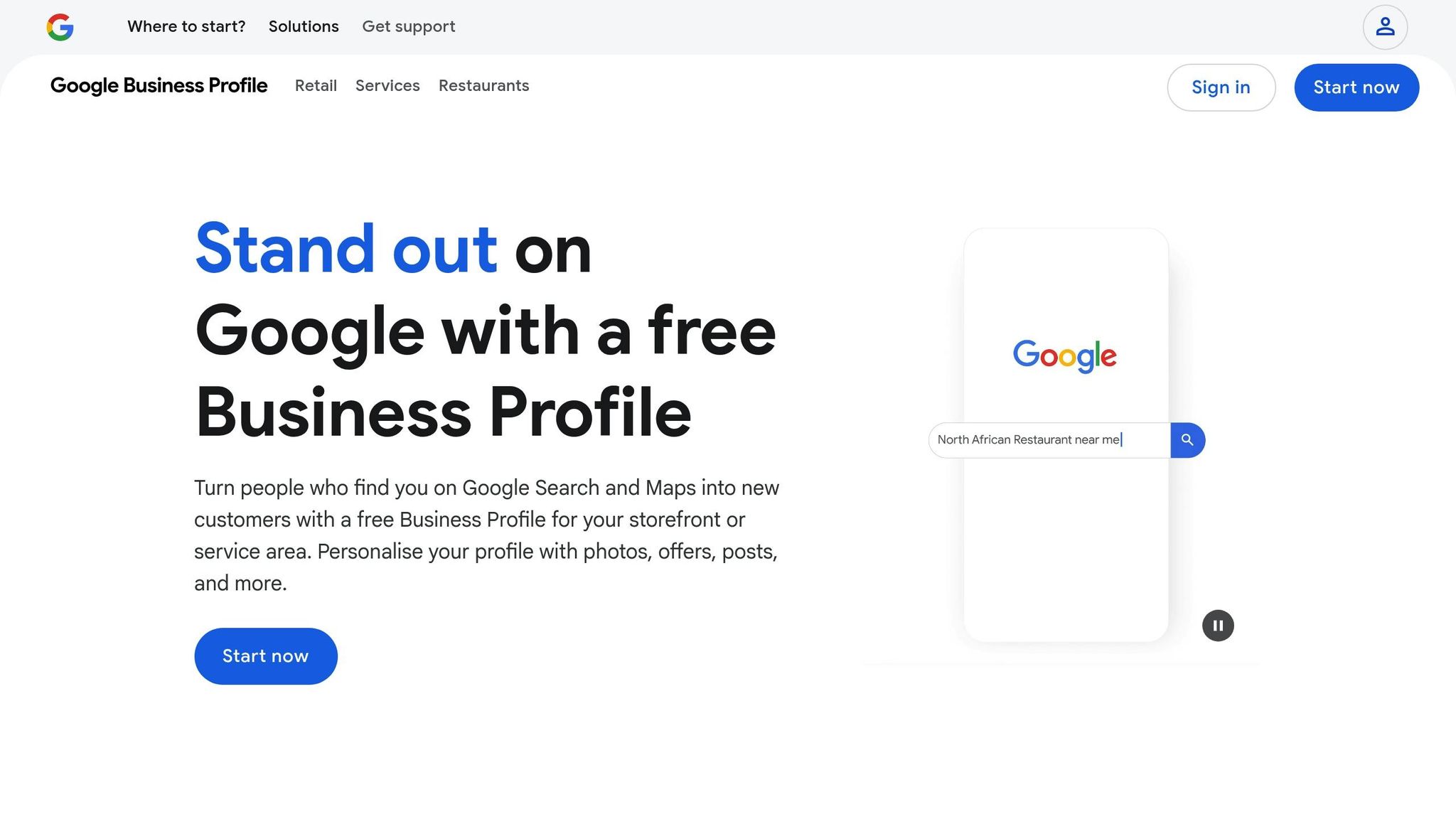
Your Google Business Profile is essential for improving local search visibility. Think of it as your digital storefront – it’s often the first thing potential customers see when searching for businesses like yours. A well-optimised profile can make all the difference.
Start by completing every section of your profile. Include your exact address, phone number, website, operating hours, and high-quality photos. Write a concise yet engaging description that naturally incorporates your primary keywords and location.
Consistency is key. Your business name, address, and phone number (NAP) must match exactly across your website, social media accounts, Google Business Profile, and any directory listings. Even small discrepancies, like using "St" instead of "Street", can confuse search engines and hurt your rankings.
Customer reviews play a big role in both attracting new clients and signalling to Google that your business is active. Respond to reviews – positive and negative – promptly and professionally. This shows both search engines and potential customers that you’re engaged and care about feedback.
Take advantage of Google Posts to share updates, promotions, or announcements directly on your profile. For example, you could highlight a recent project, introduce a new service, or share a glowing customer testimonial. Regular updates keep your profile fresh and encourage engagement.
Don’t forget to monitor your profile’s performance using Google Business Profile insights. This tool shows how customers find your business, what actions they take, and which photos or posts get the most attention. Use this data to fine-tune your local SEO strategy.
Finally, ensure your operating hours are always up to date, especially during holidays or special events. Few things frustrate potential customers more than showing up at a closed business because of outdated information online.
Target Voice Search Keywords
Voice search is changing the way people find information. Unlike typed searches, voice queries are more conversational and often phrased as complete questions. To capitalise on this, you’ll need to adjust your content strategy.
Focus on long-tail, question-based keywords. For example, instead of targeting "SEO services Cape Town", aim for phrases like, "Who provides SEO services in Cape Town?" These longer, natural-sounding phrases often face less competition and attract more qualified leads.
Create content that directly answers common customer questions. FAQ pages, blog posts, and service descriptions are great opportunities to incorporate conversational language. For instance, if someone asks, "How much does website design cost in Johannesburg?" your content should provide a clear and straightforward answer.
Structure your content to align with how people speak. Voice searches often start with words like "how", "what", "where", "when", and "why." Use these as headings or subheadings, such as "What Makes Our SEO Services Stand Out?" instead of generic titles like "SEO Services."
Local voice searches frequently include terms like "near me", "close by", or specific locations. A plumber in Durban, for instance, could optimise for phrases like "emergency plumber near me in Durban" or "24-hour plumbing services close to Umhlanga." Be sure to weave these naturally into your content, meta descriptions, and page titles.
Optimising for featured snippets is another must. Voice assistants often pull answers directly from these snippets, so format your content with clear, concise responses to common questions. Use bullet points, numbered lists, or short paragraphs to make your content snippet-friendly.
Consider the unique context of South African voice searches. People may include local terms, neighbourhood names, or even cultural references in their queries. Incorporating these naturally into your content can help you attract more relevant local traffic.
Lastly, test your voice search optimisation by using voice assistants yourself. Ask the types of questions your customers might, and see what results come up. This can provide valuable insights into what’s working and where you can improve.
sbb-itb-6f8605a
Step 7: Build Topic Clusters and Internal Links
Once you’ve fine-tuned your technical and local SEO, the next step is creating content hubs to solidify your online presence. These hubs, also known as topic clusters, help showcase your expertise and improve your relevance in the eyes of search engines. By grouping related content around a central theme, you’re not just organising your site better – you’re also setting yourself up for better visibility in search results by 2025.
Crafting Pillar Pages and Supporting Content
At the heart of every topic cluster is a pillar page. This page acts as the central hub, covering a broad subject in detail. Around it, you’ll create supporting articles that dive into specific subtopics. These supporting pieces link back to the pillar page, forming a well-structured web of content. This strategy not only makes it easier for search engines to understand your site but also provides a rich, navigable resource for your audience.
Strengthen Connections with Internal Links
Internal linking is the glue that holds your content clusters together. By strategically linking supporting articles to your pillar page and vice versa, you create a clear path for both users and search engines to follow. This approach boosts your site’s usability and ensures that your content works together to build authority and improve rankings.
Step 8: Update and Refresh Content Regularly
Keeping your content fresh isn’t just a good practice – it’s essential. Search engines favour websites that are regularly updated, and outdated information can hurt both your credibility and your rankings. By revisiting and improving your existing content, you can maintain your authority without always having to start from scratch.
Find and Update Old Information
Start by conducting a thorough audit of your older pages. Focus on those that are at least 12 months old and have seen a drop in traffic. These pages likely performed well in the past and could benefit from updates to regain their relevance.
Pay close attention to content that dates quickly. Replace outdated statistics, refresh screenshots, and update mentions of discontinued products or services. For example, if your article discusses "current trends in 2023", revise it to reflect insights for 2025 or beyond. Fix broken external links and replace them with functional alternatives that provide similar value.
Technical topics like SEO tools, social media algorithms, or digital marketing strategies need extra care. These areas evolve rapidly – what worked in Google’s algorithm 18 months ago may no longer be relevant today. Ensure that any technical advice aligns with the latest best practices.
Once you’ve made substantial updates, change the publication date to reflect the revisions. This signals to both search engines and readers that the content is up-to-date and worth revisiting.
Add Local Market Updates
To make your content resonate with South African readers, include updates that reflect local realities. South Africa’s unique circumstances – such as load shedding, fluctuating exchange rates, and local consumer behaviour – create challenges and opportunities that differ from global trends.
Incorporate local case studies and examples to provide context. Instead of relying solely on international success stories, highlight how South African companies have tackled similar challenges. For instance, mention how local businesses navigate connectivity issues or manage international tool subscriptions affected by the rand’s value.
When discussing economic topics, include local data. For example, if you’re writing about digital marketing budgets, reference South African spending patterns. Consider how events like municipal elections or major sporting events, such as the Rugby World Cup, influence search trends and marketing strategies.
Seasonal updates are particularly important for South African audiences. Since our seasons are opposite to those in the Northern Hemisphere, content about "summer marketing strategies" needs to reflect local timing. Tailor your content to South African holidays, school terms, and shopping habits to make it more relevant.
Finally, acknowledge regional differences within the country. Marketing strategies that work in Cape Town might not be as effective in Johannesburg or Durban. By recognising these variations, you demonstrate a deeper understanding of South Africa’s diverse market landscape.
Step 9: Get Local Backlinks
Once you’ve tackled the technical side of things, the next step is building a strong local backlink strategy. Why? Because local backlinks carry more weight for your SEO than international ones. Google places a high value on local relevance, so backlinks from South African sources can significantly boost your rankings in local searches – whether that’s in a specific city or across a province. Here’s how you can take advantage of this.
Local backlinks do more than just improve your rankings in Google’s Local Pack. They also signal trust and authority within your community. Below are some practical ways to start building a powerful local backlink profile.
Target South African Websites
Start by focusing on credible local websites that resonate with your industry and audience. South African business directories are a great place to begin. Listing your business on platforms like Yellow Pages South Africa (yellowpages.co.za), Brabys Business Directory (brabys.com), SA Business Hub (sahub.co.za), Entrepo (entrepo.co.za), and Hotfrog South Africa (hotfrog.co.za) can provide solid foundational links.
Local media outlets can also be a goldmine for high-quality backlinks. Reach out to well-known platforms like News24, IOL, or TimesLive with newsworthy stories about your business. Additionally, guest blogging on respected South African industry blogs or websites can further strengthen your backlink profile.
Build Local Partnerships
Collaborating with other local businesses can lead to natural link exchanges and cross-promotions that search engines value. For instance, if you’re a web design agency, teaming up with a local marketing firm to offer joint services can benefit both businesses while earning valuable backlinks.
Use Digital PR and Influencer Collaborations
Invest in digital PR campaigns aimed at South African media outlets to secure high-quality backlinks and improve your domain authority. Partnering with local bloggers or influencers who have established audiences can also help you reach more people while boosting your backlink profile.
When building local backlinks, always prioritise quality over quantity. A single link from a respected South African publication or industry site will have a much greater impact than dozens of links from less credible sources. Focus on building genuine, lasting relationships within your local business network, and the backlinks will come naturally.
Step 10: Use Local Social Media Platforms
Social media plays a key role in boosting SEO through active community engagement. Search engines tend to favour businesses that interact with their local communities on social platforms, interpreting this activity as a sign of credibility and trustworthiness. By keeping your social media presence lively, you’re not just connecting with potential customers – you’re also driving traffic to your website and earning backlinks that can improve your search rankings.
Integrating social media with your local SEO strategy strengthens your brand’s online presence. It complements earlier SEO efforts by enhancing both your visibility in search results and your connection to the community.
Post Content on Local Platforms
Leverage platforms like Facebook, Instagram, and LinkedIn to share content tailored to your local audience. For instance:
- Use Facebook to post updates about local news and events.
- Share visual stories on Instagram using local hashtags like #CapeTown or #Johannesburg.
- Post professional insights on LinkedIn, focusing on trends in the South African market.
Create content that resonates with your audience by highlighting local holidays such as Heritage Day or Youth Day, engaging with trending topics, and using location tags for cities and landmarks. Share behind-the-scenes updates, feature South African customers, and showcase partnerships with local suppliers. Whether it’s celebrating community milestones or discussing practical solutions to load shedding, your posts should reflect your genuine connection to the South African market. This approach not only builds trust with your audience but also signals to search engines that your business is deeply rooted in the community.
Join Community Groups
Taking your local strategy further, participating in community groups can significantly enhance your market presence. Engaging with local Facebook, LinkedIn, or WhatsApp groups can boost your brand’s visibility and establish trust within your community.
- Facebook Groups: Join groups like "Cape Town Business Network", "Johannesburg Entrepreneurs", or "South African Digital Marketing Professionals." Share helpful advice, answer questions, and provide insights that add value without coming across as overly promotional. Over time, this builds credibility and encourages members to visit your website or recommend your services.
- LinkedIn Groups: Get involved in professional communities such as "South African Business Professionals" or industry-specific groups. Use these platforms to share thoughtful commentary on market trends, offer solutions to common business challenges, and engage in meaningful discussions about the South African business environment.
- WhatsApp Business Groups: These are popular for quick networking and referrals. Many local business networks and industry associations use WhatsApp to facilitate communication and collaboration.
Step 11: Track Performance and Analytics
Measuring SEO success goes beyond simply checking if your website shows up in search results. Without proper tracking, it’s impossible to know which strategies are effective. Analytics turn guesswork into actionable insights, helping you make smarter decisions that improve rankings and deliver better results for your business.
By setting up detailed tracking, you can focus your time and resources on the strategies that truly work for your South African audience.
Monitor Rankings and Traffic
Google Analytics 4 is your go-to tool for understanding website performance. Once you’ve installed the tracking code, you can monitor organic traffic to see how many visitors are finding you through search engines. Metrics like pages per session reveal how well your content is engaging users.
Dive into audience demographics to uncover interesting trends, such as local traffic patterns or differences in how people use mobile versus desktop devices.
Google Search Console offers a deeper look into the technical aspects of your SEO. Its Performance report highlights keyword queries, average rankings, and click-through rates (CTR). For example, you might discover you’re sitting on page two for "accounting services Pretoria" and need just a little extra effort to break into page one.
Keep an eye on Core Web Vitals in Search Console, as these metrics directly impact your rankings.
For businesses targeting local audiences, track local search performance by focusing on location-specific keywords. Search Console allows you to see how your website performs for searches in cities across South Africa. This helps you identify where your local SEO efforts are thriving and where there’s room for improvement.
These insights form the foundation for targeted content updates and technical tweaks.
Use Data for Improvements
Once you have performance metrics, use them to make meaningful changes. For instance, if you notice certain pages have high bounce rates, it might mean the content doesn’t align with what users are searching for, or there could be technical issues driving them away.
Content adjustments become far more effective when guided by data. If Analytics shows visitors spend lots of time on your blog about small business tax compliance but leave your service pages quickly, you could add educational elements to those service pages or create topic clusters to better connect related content.
Keyword performance analysis can also reveal opportunities. If Search Console shows you’re ranking between positions 8-15 for valuable keywords, these are prime candidates for improvement. Simple updates like refreshing old content, improving meta descriptions, or adding internal links can often push these pages onto the first page of search results.
Monthly performance reviews allow you to spot trends that might not be obvious in daily monitoring. Set up alerts in Google Analytics to notify you of significant changes, and compare metrics like organic traffic, keyword rankings, and conversion rates month over month. For example, you might notice traffic dips in December or spikes when universities reopen, insights that can shape your content calendar and marketing plans.
Finally, use goal tracking to measure the results that matter most, whether it’s newsletter signups, quote requests, or phone calls. Connecting these conversions to your SEO efforts proves the value of your work and helps you decide where to allocate your marketing budget. This ensures your resources are spent on strategies that drive real business outcomes.
Step 12: Work with Aion Marketing for SEO Success
Once you’ve implemented these SEO strategies, you might want to consider teaming up with experts to maximise your results. While doing it yourself can bring progress, partnering with professionals can speed up the process and significantly boost your online presence. For businesses in South Africa, this support can be a game-changer in staying ahead in a competitive market.
Why Choose Aion Marketing?
Aion Marketing offers customised strategies tailored to the needs of South African SMEs. Here’s what you can expect:
- Clear Reporting: Gain easy-to-understand insights into how your campaigns are performing, ensuring you can make well-informed decisions about your marketing efforts.
- Ongoing Adjustments: The digital world is always changing, and Aion Marketing ensures your strategies evolve to keep you competitive.
- SME-Focused Solutions: They understand the unique challenges of small and medium businesses, providing targeted strategies that deliver measurable results.
- Data-Driven Insights: Every decision is backed by advanced analytics, ensuring precision and effectiveness.
- Long-Term Collaboration: Build lasting partnerships that offer deep industry knowledge and consistent growth.
Services Offered by Aion Marketing
Aion Marketing provides a wide range of services designed to complement and enhance your SEO strategy. Their offerings include:
- Google Ads Management
- Search Engine Optimisation (SEO)
- Meta Ads Management
- Social Media Management
- AI Chatbot Solutions
Conclusion: Your SEO Success Plan for 2025
The 12 steps outlined here provide a solid framework to improve your search rankings in 2025. By focusing on mobile-first design, Core Web Vitals, local SEO, and AI tools, you can strengthen your online presence in South Africa.
With Google updating its algorithm around 600 times a year, SEO is not a one-time task but an ongoing process that demands consistent attention. The numbers speak for themselves: only 3% of websites achieve meaningful traffic from Google, 58% of users access websites via mobile, and the top search result alone garners 27.6% of clicks. These stats emphasise why having a strong SEO strategy is non-negotiable.
Using tools like Google Search Console and Analytics can help you keep track of your performance and make timely adjustments. Regular audits are equally important – they help uncover technical issues and content gaps while reinforcing the importance of high-quality, relevant content. For instance, the average top-ranking Google page has about 1,447 words, proving that detailed, helpful content still performs well. When creating content, aim to genuinely address your audience’s needs while incorporating keywords and local context relevant to South Africa.
Technical aspects like fast loading speeds, HTTPS security, and proper schema markup may not be visible to users, but they’re essential for search engines. These elements tie back to earlier steps on technical and local SEO, ensuring your strategy is both cohesive and effective.
Given the complexity of modern SEO, seeking expert guidance can often make a significant difference. While you can implement many of these steps yourself, working with professionals who understand algorithm changes, technical optimisation, and local market trends can help you achieve results faster.
Start by addressing the most pressing issues: fix technical errors, optimise for mobile users, and ensure your content aligns with search intent. Then, tackle the remaining steps gradually, using data from your analytics tools to guide your adjustments.
Every action, from resolving technical problems to targeting local searches, contributes to a unified, data-driven approach for long-term SEO success. Treat SEO as an ongoing investment, not a quick fix, and begin implementing these strategies today.
FAQs
How can AI-powered SEO tools boost my website’s rankings in South Africa?
AI-powered SEO tools are a game-changer for boosting your website’s rankings. They handle time-consuming tasks like keyword research, content optimisation, and technical SEO with precision and speed. By processing large volumes of data, these tools pinpoint the keywords that matter most to your audience, fine-tune your content for better engagement, and ensure your site aligns with search engine requirements.
Using AI, you can keep up with ever-changing search algorithms while focusing on delivering a smooth and engaging user experience – a must in South Africa’s competitive online market.
What are Core Web Vitals, and how do they impact my website’s SEO and user experience?
Core Web Vitals are a set of performance metrics introduced by Google to assess how users experience your website. They focus on three main aspects: how quickly the page loads, how responsive it is to user actions, and how stable the visuals are as the page loads. These metrics aim to ensure websites are fast, easy to interact with, and visually reliable, all of which play a big role in creating a better experience for visitors.
Why do Core Web Vitals matter? They directly influence your website’s search engine rankings and shape how users feel about your site. A fast-loading, smooth-running site not only keeps visitors around but also encourages them to engage more and, ultimately, take action – whether that’s making a purchase, signing up, or exploring further. In today’s highly competitive online space, these factors can make all the difference.
What is the difference between local SEO and traditional SEO, and why is it important for South African businesses?
Local SEO is all about making sure your business shows up in online searches within a specific area. Unlike traditional SEO, which casts a wider, often global net, local SEO hones in on location-based searches – think "restaurants near me" or queries that include a city or neighbourhood.
For businesses in South Africa, this approach is a game-changer. It helps nearby customers find you easily, increases foot traffic to your physical location, and gives you an edge in competitive local markets. Plus, showcasing your local presence builds trust, which is crucial in South Africa’s relationship-focused and culturally rich communities.


